How Chores Can Help Kids Build Money Skills
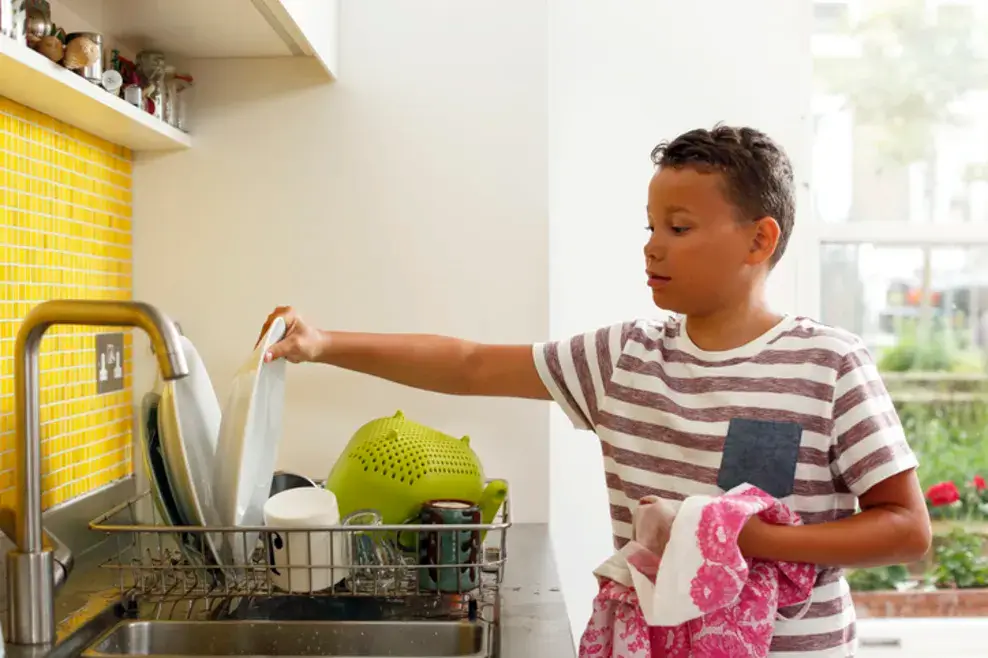
Chores get a bad rap for being tiresome and tedious tasks, but we’ll show you how to use them as tools for building financial foundations. Getting kids involved in chores at an early age doesn’t just lead to tidy rooms—it could set them up for a lifetime of financial success!
Tips for establishing a chore routine
Starting early is key when introducing chores to your child. Here are some actionable tips to help:
- Set clear expectations: Clearly communicate what needs to be done, making tasks manageable and age-appropriate.
- Establish routines: Set regular schedules for chores (maybe on Saturday mornings or right after school), incorporating them into daily or weekly routines.
- Be consistent: Avoid frequently changing rules to prevent frustration or confusion.
- Focus on small tasks: For younger children, start with small, manageable tasks and make them fun and cooperative.
- Use positive reinforcement: Offer praise, rewards, and/or payment to encourage good behavior and completion of chores.
Selecting age-appropriate chores for your kids
Assigning tasks according to your child’s age and capabilities is essential for success. Here’s a breakdown of suggested chores by age:
| 2 to 3 | putting away toys and groceries, with assistance |
| 4 to 5 | feeding pets, making beds, and helping with simple clean-up tasks |
| 6 to 7 | wiping surfaces, putting away laundry, and sweeping |
| 8 to 9 | assisting with meal preparation, loading the dishwasher, and walking the dog |
| 10 to 11 | changing sheets, cleaning bathrooms, and helping with more advanced kitchen tasks |
| 12+ | washing cars, assisting with younger siblings, and mowing the lawn |
In addition to building essential life skills, chores offer practical opportunities to introduce your child to financial concepts such as earning, saving, and budgeting. More importantly, they will give them the opportunity to handle, identify, and count coins and bills — basic skills that are becoming weaker among students due to digital payments becoming more prevalent in today’s world. For more financial literacy resources for kids, visit vacu.org/kids.
How to pay your kids for chores
Once your kids are finished dusting or sweeping, they’ll soon be putting their hands out for their hard-earned cash. So, how do you establish a fair and effective payment system?
Determine payment frequency: Decide how often you’ll pay kids for their chores. Weekly or monthly payments are common options, but choose a schedule that works for your family so that everyone has the same expectations.
Set clear rates: Establish clear payment rates. Will there be a per-chore rate, or will they receive a set allowance if all chores are completed? Pick a system that works for you and your kids.
Pick a tracking system: Decide as a family how chores will be tracked. Is there a physical chore chart in your home, or perhaps an app or online spreadsheet? Whatever the plan, involve your kids in tracking their own progress so they can see how their work earns their cash.
Use real money: Whenever possible, pay your kids with coins and bills rather than just keeping track of earnings digitally. This helps them understand the tangible value of their earnings and build important money-handling skills.
Coaching kids to handle their chore money
Once your kids have earned money through chores, here are some tips to help guide them:
- Save, spend, share: Encourage your kids to divide portions of their allowances into three buckets: money to save, money to spend, and money to donate, perhaps to their favorite charities.
- Pick a proper (and protected) place: Depending on your kids’ ages, help them identify secure methods of money storage that makes sense for them. Perhaps it’s a jar for each purpose or opening them a savings account.
- Encourage delayed gratification: Teach your kids to think before making impulse purchases. Encourage them to wait a certain amount of time before buying something they want to ensure it’s a thoughtful decision rather than a hasty one.
- Lead by example: Be a positive role model by demonstrating good money management habits and involving your kids as you talk about how you budget, save, and make smart spending decisions. By including children in family money talks within the context of chores and allowances, you can nurture their financial independence and decision-making skills.
This collaborative approach to money management fosters open communication and empowers children to make smart financial choices with the money that they have worked so hard to earn. So, embrace chores as valuable teaching tools, and watch your children grow into money-savvy adults.